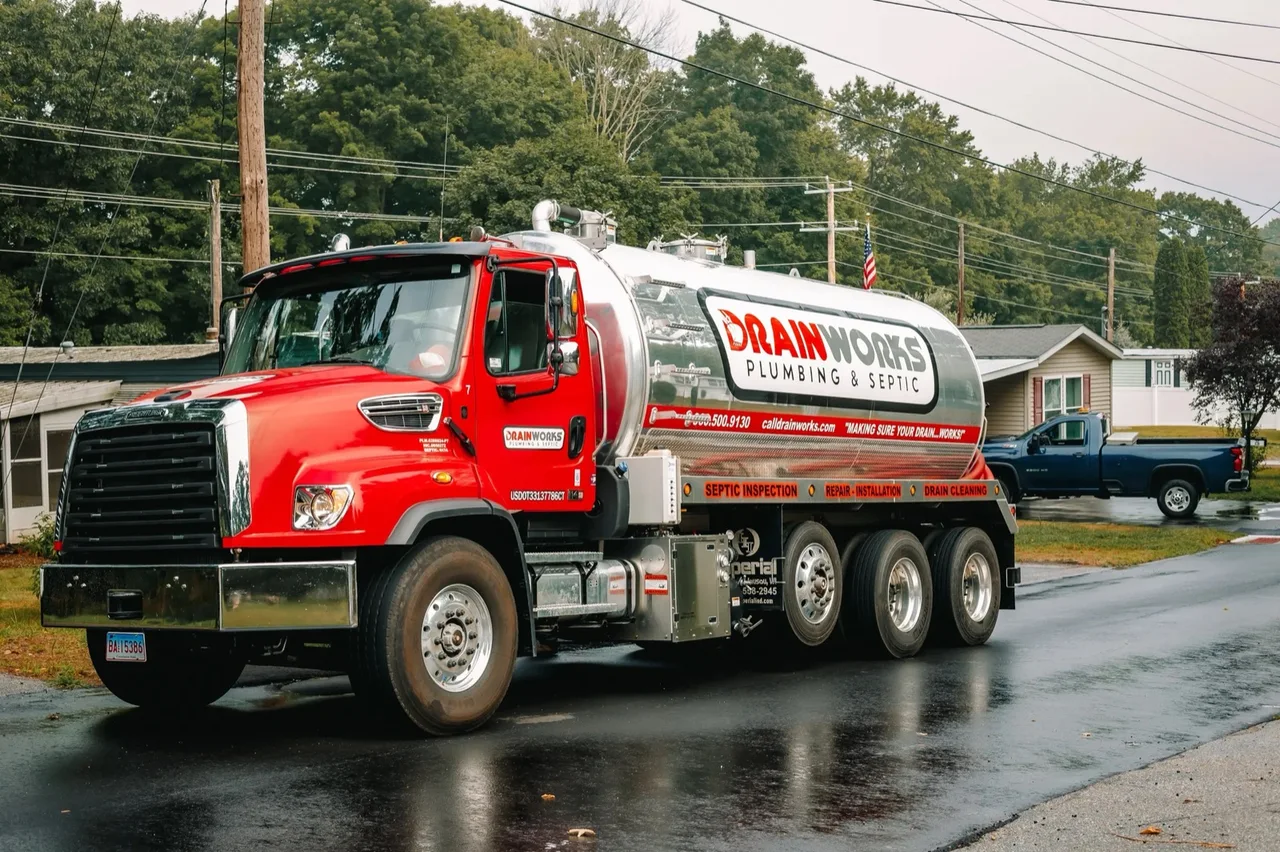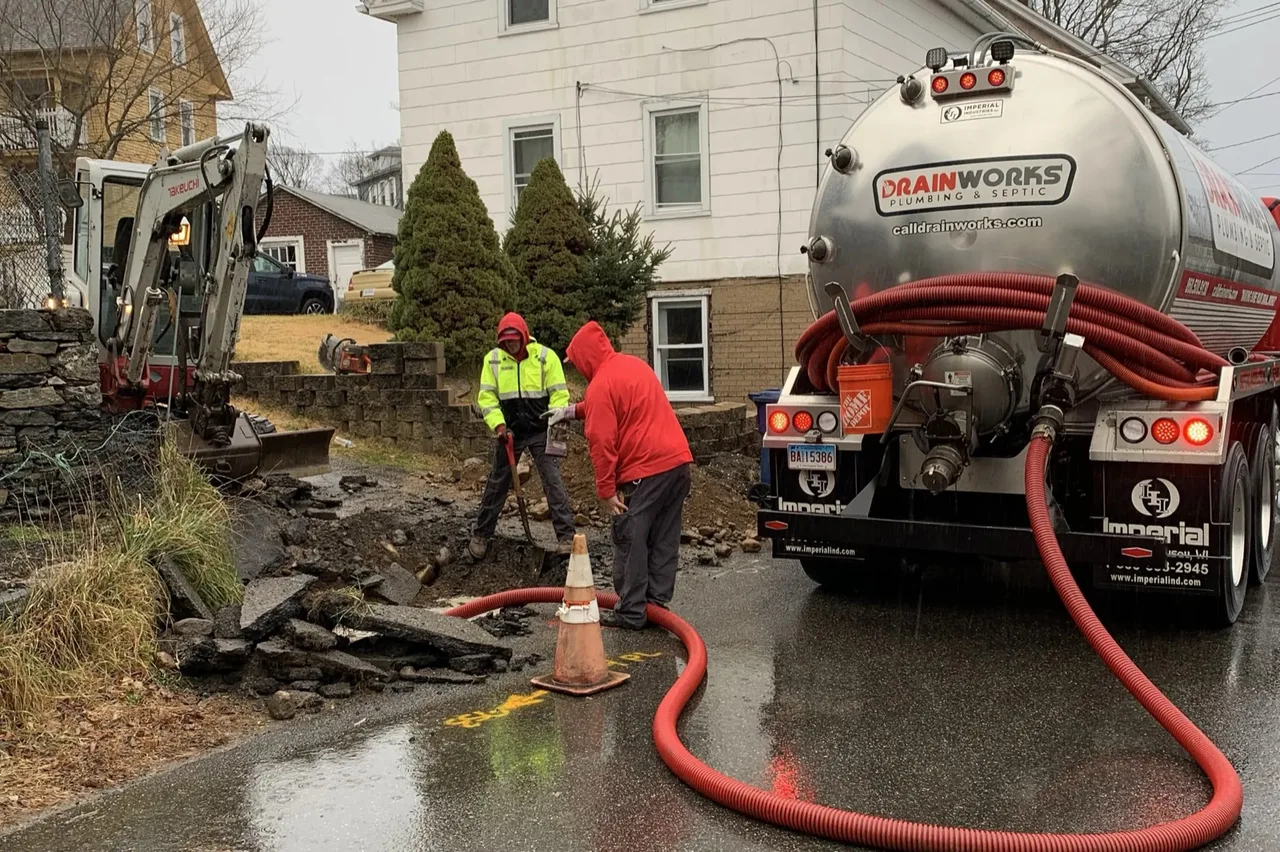
Drainworks recommends pumping your septic tank every two years, and general guidance is at least every three to five. Pumping removes the sludge and scum that build up in the tank before they reach the leach field. At Drainworks a 1,000-gallon pump-out starts from $446, with 12 inches of digging, filter cleaning and a written condition report included.
How a septic tank works
Everything that goes down a drain in a house on septic flows to one tank buried in the yard. Inside, heavy solids sink and form sludge, while grease and light material float and form scum. The liquid in the middle, called effluent, flows out to the leach field, where the soil finishes treating it.
Bacteria in the tank break down some of the solids, but never all of them. The sludge and scum layers grow every day, and pumping is the only way to remove them.
How often to pump
Drainworks recommends a pump-out every two years. General guidance is at least every three to five years, so treat that as the outside limit, not the goal. More people in the house, a smaller tank or a garbage disposal all fill the tank faster, and solids that reach the leach field are far more expensive to fix than a pump-out.
The Septic Protection Plan and Family Protection Plan schedule a pump-out every two years automatically, with a yearly inspection in between.
Signs your tank is full
- Slow drains across the whole house, not just one sink
- Gurgling in pipes and toilets
- Sewage odor near the tank or the leach field
- Soggy ground or bright green grass over the field
- Backups in the lowest drain in the house
- A septic alarm sounding on systems with a pump chamber
What a Drainworks pump-out includes
- Finding the lids and up to 12 inches of digging
- Pumping every compartment, with extra mixing only when heavy solids need it
- Cleaning the outlet filter if your tank has one
- A written condition report on the baffles and liquid levels
- Backfilling and seeding anywhere we dug
What it costs
Drainworks prices pumping by tank size: from $446 for up to 1,000 gallons, from $477 for 1,250 gallons and from $524 for 1,500 gallons. Deeper lids, long hose runs, frozen ground or a tank that cannot be found can add to the price. Your technician confirms the price on site, and no work starts until you approve it.
What not to flush
Wipes, grease and harsh chemicals are the three things we pull out of Connecticut tanks most. Wipes do not break down, grease hardens into the scum layer, and chemicals kill the bacteria the tank depends on. No additive replaces pumping.
 Written by the Drainworks team
Licensed plumbing contractor PLM.0288824-P7 · septic installer #6174 · updated October 14, 2026